
Nature Node Stewardship: Climate Hubsters vs Himalayan Space Invaders
By Rob Miller, Nature Node Co-Chair
A small creek meanders down the middle of Confederation Park feeding a pond busy with waterfowl and young families watching from a sturdy observation platform. Across the still water pink, orchid-like flowers rise from the bank. Their ornamental beauty once enticed local gardeners to import these plants from the Himalayas to decorate their yards. Little did they know that these opportunistic plants would eventually find their way to the banks of watersheds throughout Alberta.
The Himalayan Balsam is considered an invasive aquatic plant in our province because it aggressively chokes out native vegetation. The invading species also attracts pollinators away from the plants that would normally thrive along the banks of our watersheds. The end result is reduction of the natural habitat that attracts and feeds local wildlife.
Calgary Parks has been spraying herbicide on the Himalayan Balsam in Confederation Park for a couple of years without success. It’s particularly difficult to eradicate because a single plant can produce up to 4,000 seeds and the seed pods explode when they eventually dry out or if they’re disturbed by humans or wildlife. The pod blast can spread seeds up to ten meters into the surrounding grass and shrubs. Seeds launched into Confederation creek will float, spreading the invasion further downstream.
On a pleasant Saturday morning in June, volunteers from the Calgary Climate Hub began arriving at Confed Park, just north of 14th Street, NW. Jenna Watson, a Natural Areas Management Technician with Calgary Parks emerged from a copse of dogwood and willows, wearing an orange safety vest and carrying a handful of freshly pulled Himalayan Balsam. These demo plants were part of her safety briefing and instructions for identifying and pulling the pesky interlopers from northern India.
What can a group of 25 volunteers do to slow down an invading lifeform that can reproduce thousands of copies of itself with a single blast of a seed pod? Never underestimate the agency of a passionate, enthusiastic and hardworking group of citizens. In just over two hours, this pop up community that seemed to be chatting as much as they were working filled 49 bags with Himalayan Balsam.
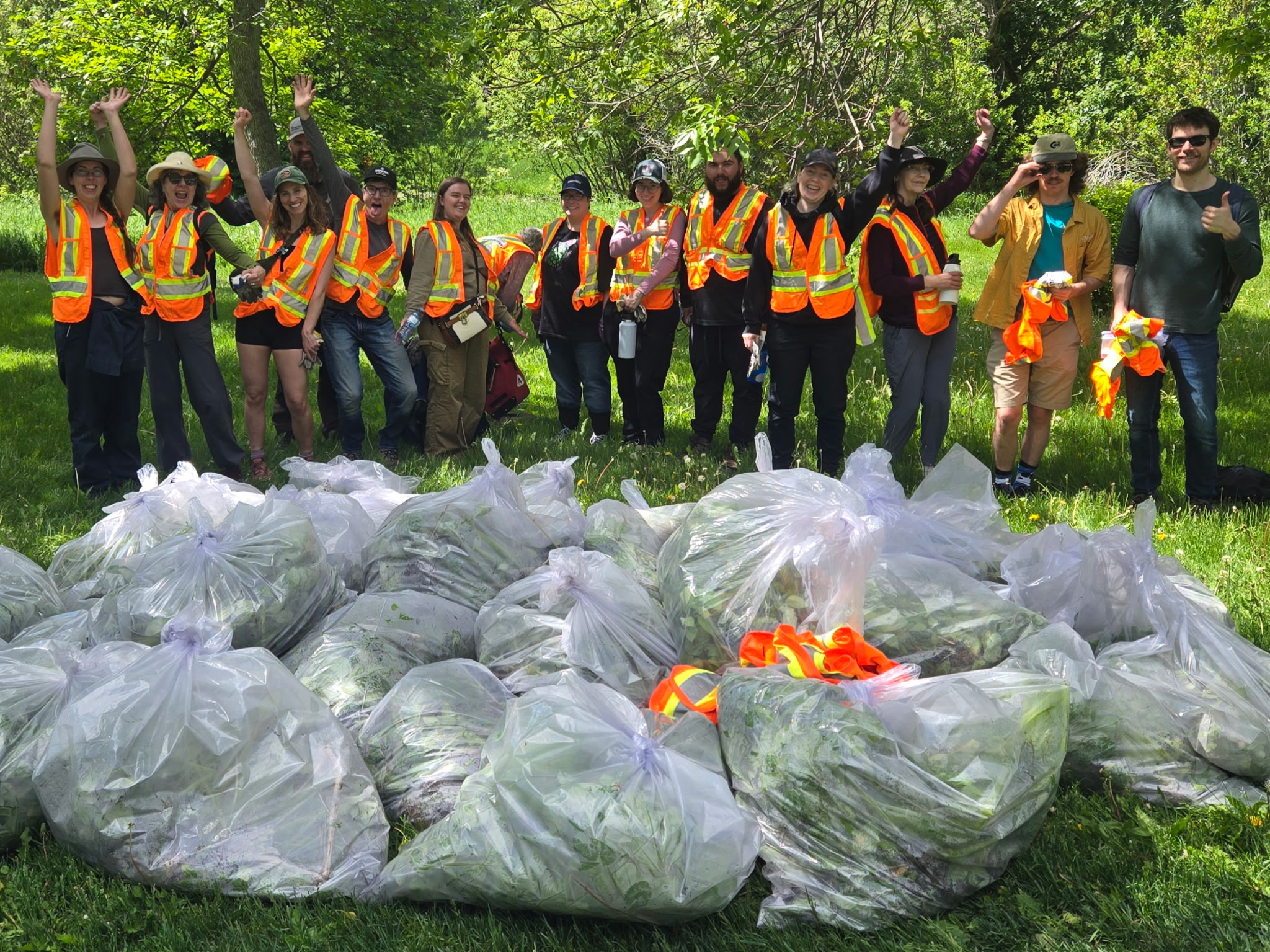
The trick is pulling the weeds before they go to seed later in the summer. If each bag held roughly 100 plants, with an average of 2000 seeds per plant, then nearly ten million seeds were kept off the ground. Granted there were plenty of plants left growing, but they’ll be tackled by subsequent weed-pulling volunteers in July.
In August, Parks staff will spray herbicide to try and eliminate what’s left of the Himalayan Balsam, or what has regrown, presumably to attack the weed without disturbing it enough to blow the seed pods. As seeds from previous years can remain viable for two years it will take a concerted effort for at least a couple years to ensure the seed stock is depleted sufficiently.
The final phase of regenerating the natural ecosystem will be to replant native species that will outcompete and Himalayan Balsam that survives the removal process. The native plants selected should be of a variety that grows vigorously, is taller than the Himalayan Balsam, prefers moist soil, and can tolerate partial shade. This will increase the chances of preventing recolonization from the seed bank of the invading weed.
There are many hardy and beautiful native plant choices including willows, fireweed, asters and wild mint, but the best choice would be native plant species that are already growing in the area. Native plants will naturally start to fill in the territory occupied by an invasive weed once the weed is removed, but by planting the process is kickstarted before the weed can recover and begin to dominate the ecosystem once again.
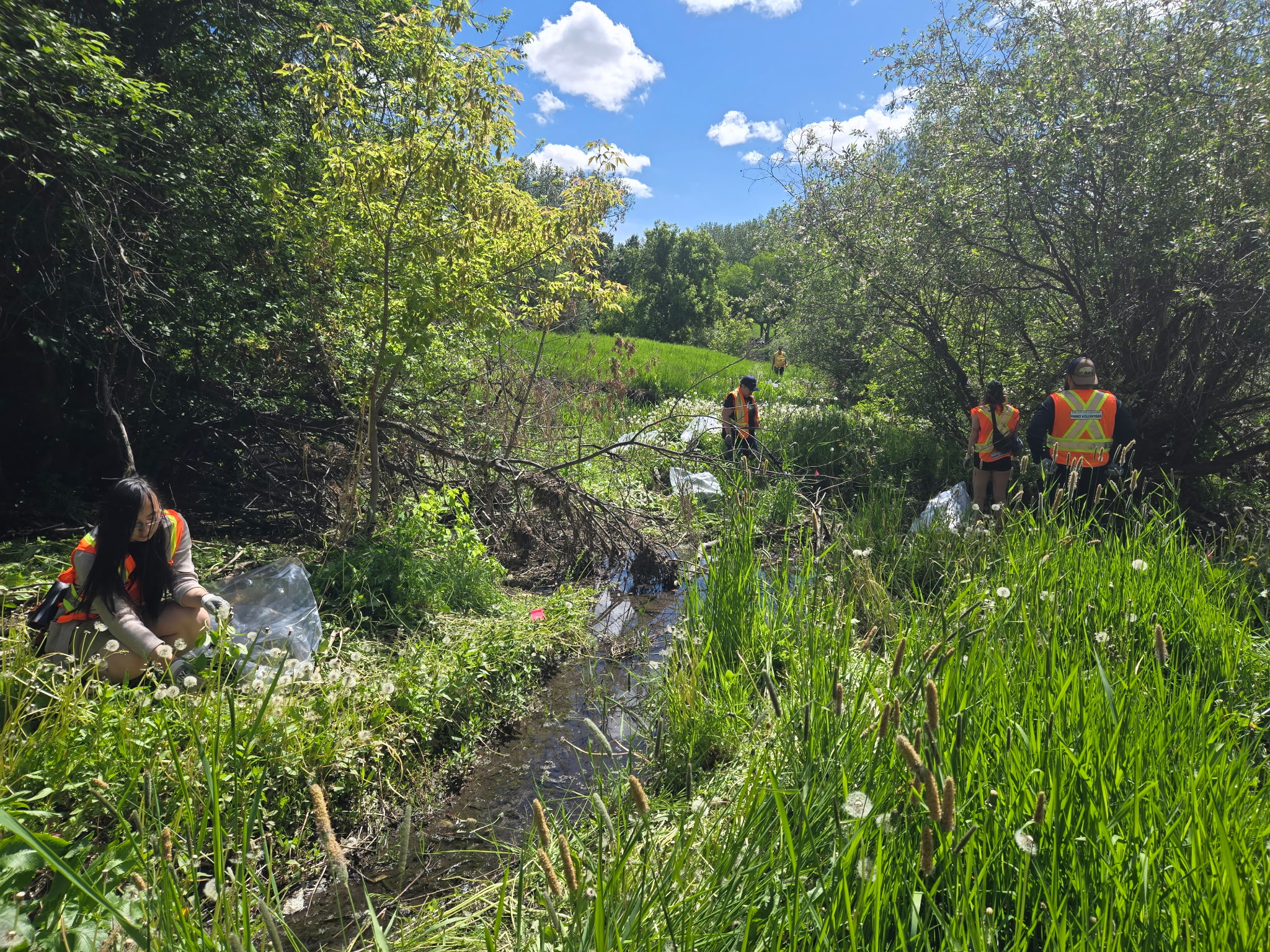
This is the kind of community building event that enables regeneration of parks and green spaces across Calgary and restores them to a healthy and more natural state. It’s not only good for the ecosystem, the participants in this kind of project learn about nature stewardship, make new friends and connections, and feel a genuine sense of accomplishment at the end of the day.