
Hub's First Ever Mini Forest Citizen Science Training
Our first Mini Forest Citizen Science event was a rousing success. Our goal was to train a core group of volunteers to measure parameters in our mini forests to track overall forest health and growth using protocols developed by the Network of Nature and Green Communities Canada. After this training session, the group will be able to track tree and shrub growth, soil health, flood management, biodiversity, and human interactions.
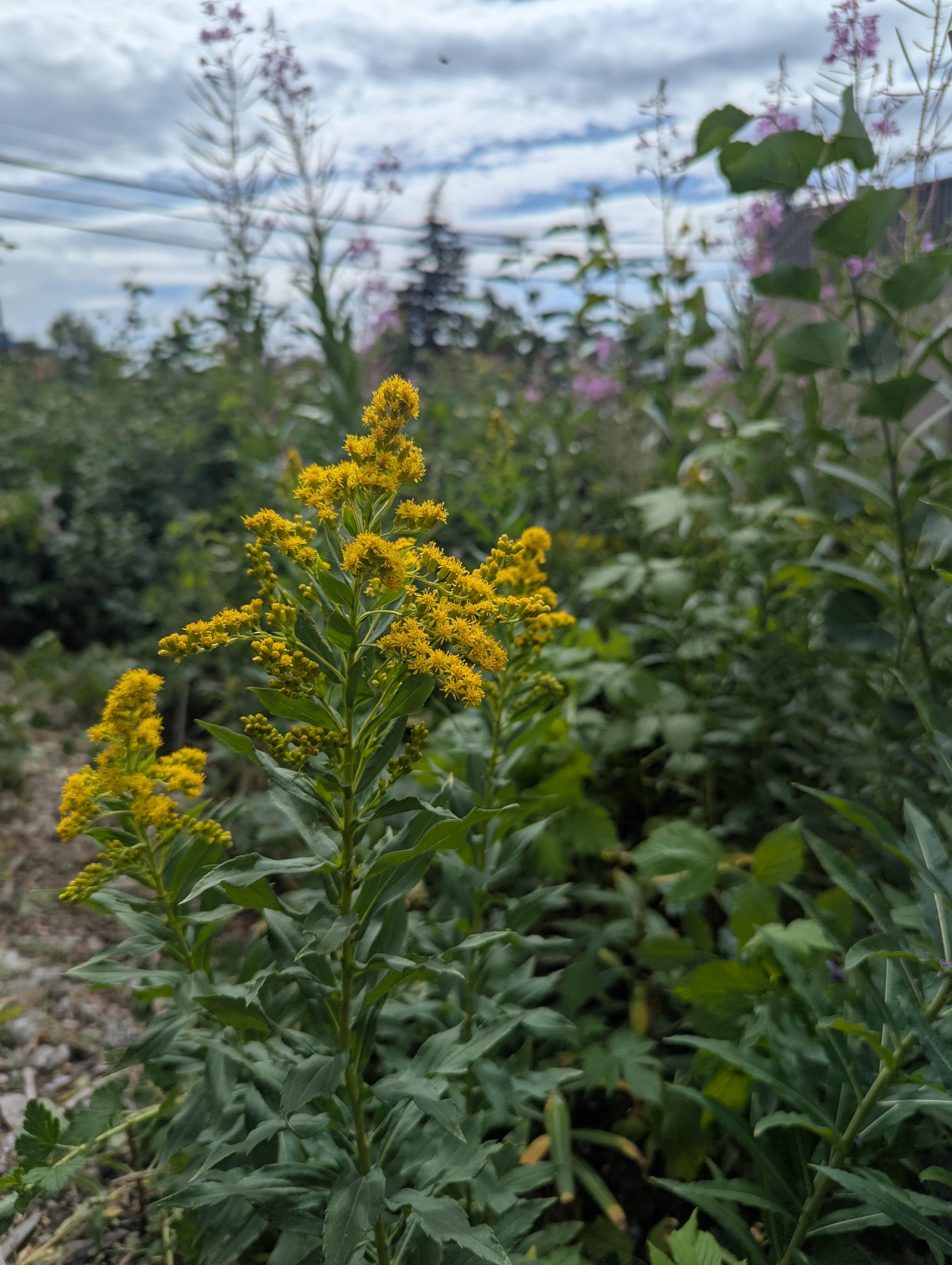
A total of ten volunteers, three experts, and the Hub’s two Tree Equity Ambassadors joined Heather and me at the training session held at the Calgary Centre for Spiritual Living’s (CCSL) Mini Forest. We started with quick introductions and a run-through of our plans for the day, then the action moved outside to the mini forest, which was buzzing with bees and bursting with colour.
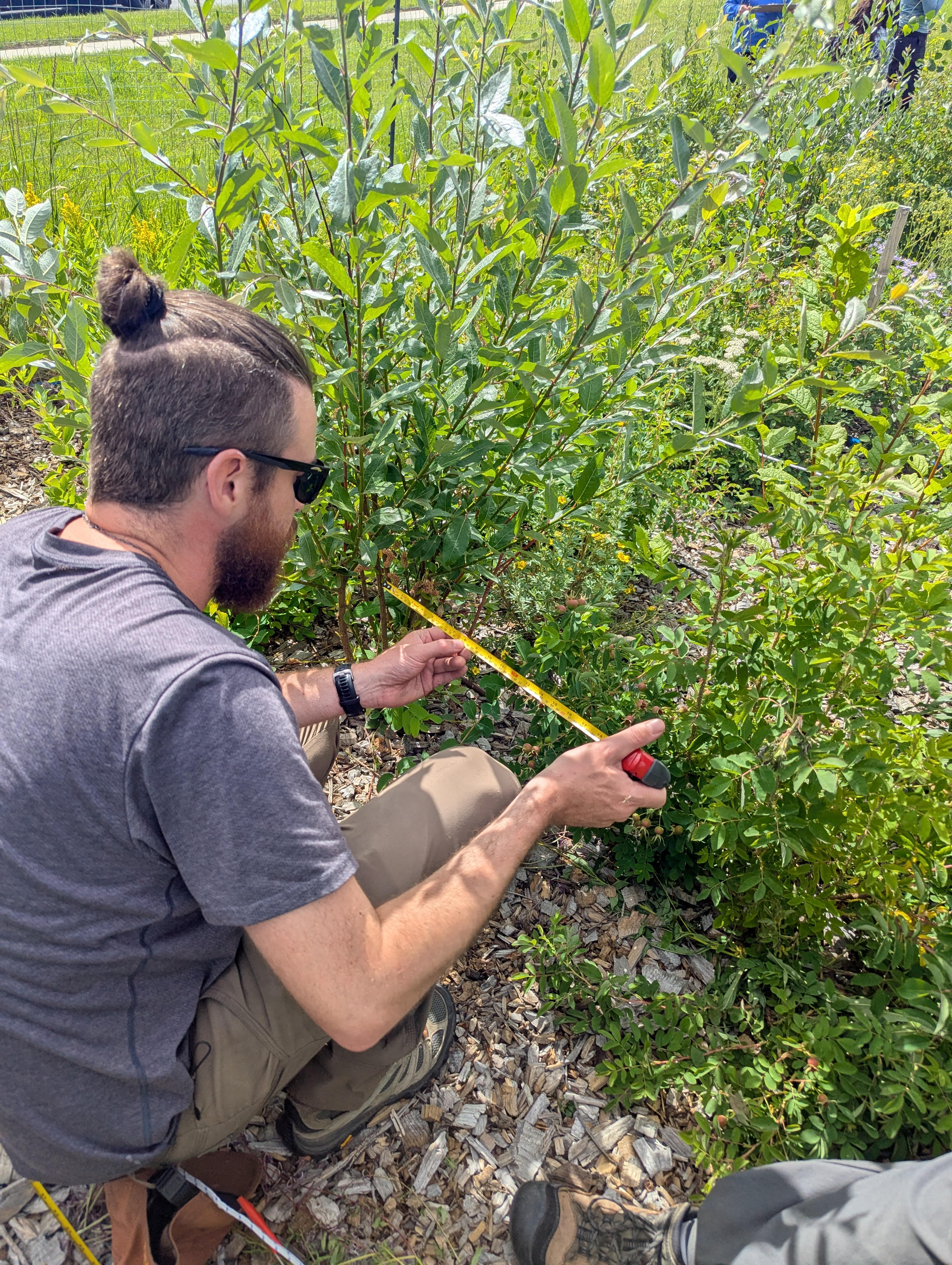
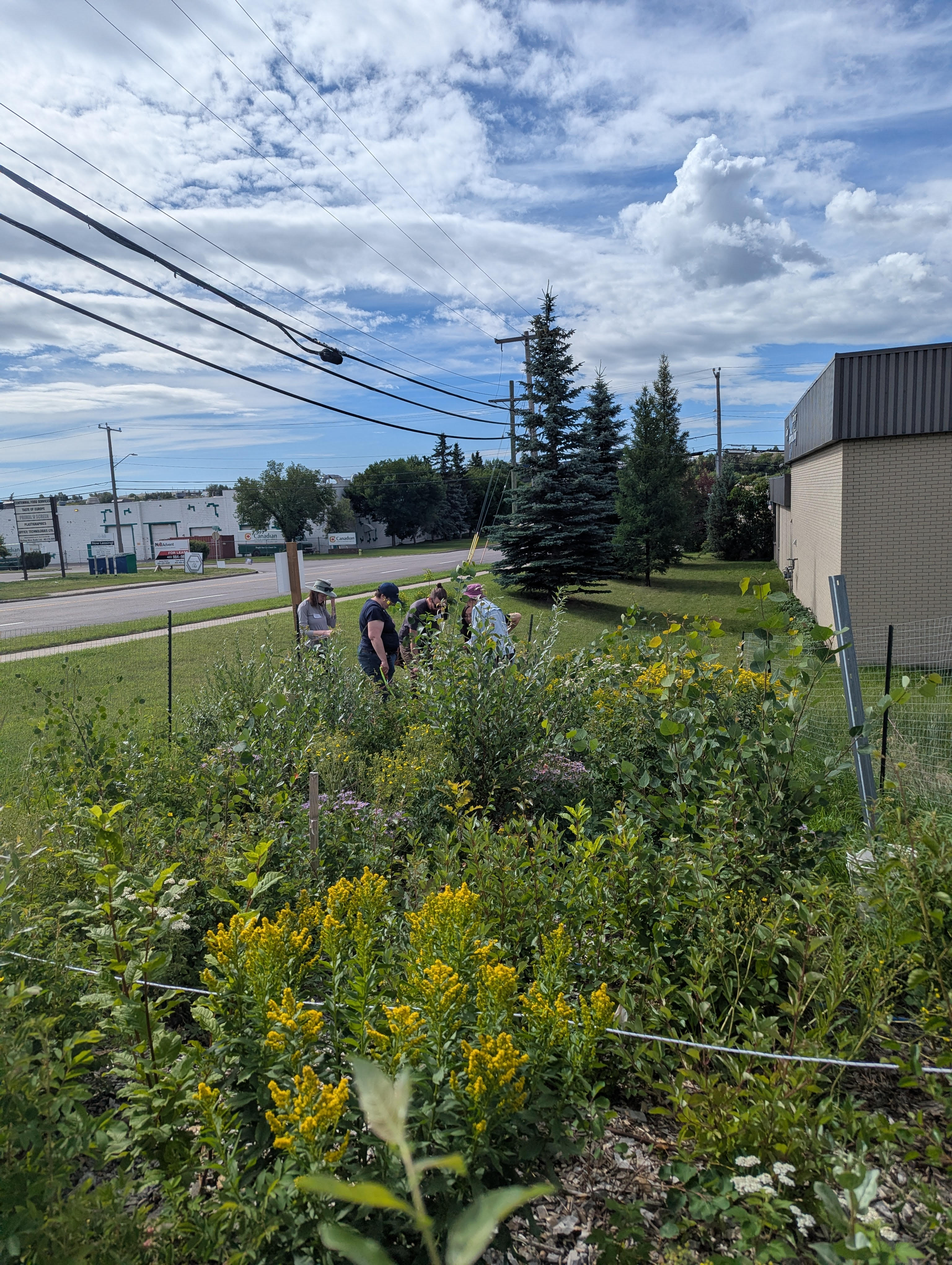
Our first task was to create a 1-metre-wide section of the forest, called a monitoring strip. During a real monitoring session, all forest measurements would be taken within this strip. We learned that our small coloured flags are not prominent enough to delineate a strip due to how tall and vigorous the plants have grown (a good problem to have!). In the future, we will use larger stakes that are easier to see, possibly painting the top a bright colour or adding flagging tape.
Next, we split into four groups to let each participant work closely with an expert to learn each protocol. We each spent about twenty minutes with one protocol, before switching to the next. Chris Manderson, our plant expert, led the tree/shrub health and plant mapping training. With a few volunteers at a time, he explained how to properly create a map of the plants within the forest, as well as how to assess the health of plants and how to measure growth.
Heather Addy, our co-organizer and soil expert, led the flood management and soil health training. She showed participants how to measure water infiltration rates and the wetness level of the forest soil. We found that our supplies could be improved for this section, and we will be looking for better metal rings for water infiltration testing. Heather also explained the soil health protocols, where we learned how to determine soil colour with the Munsell color system, and how to determine soil texture with a diagnostic flow chart.
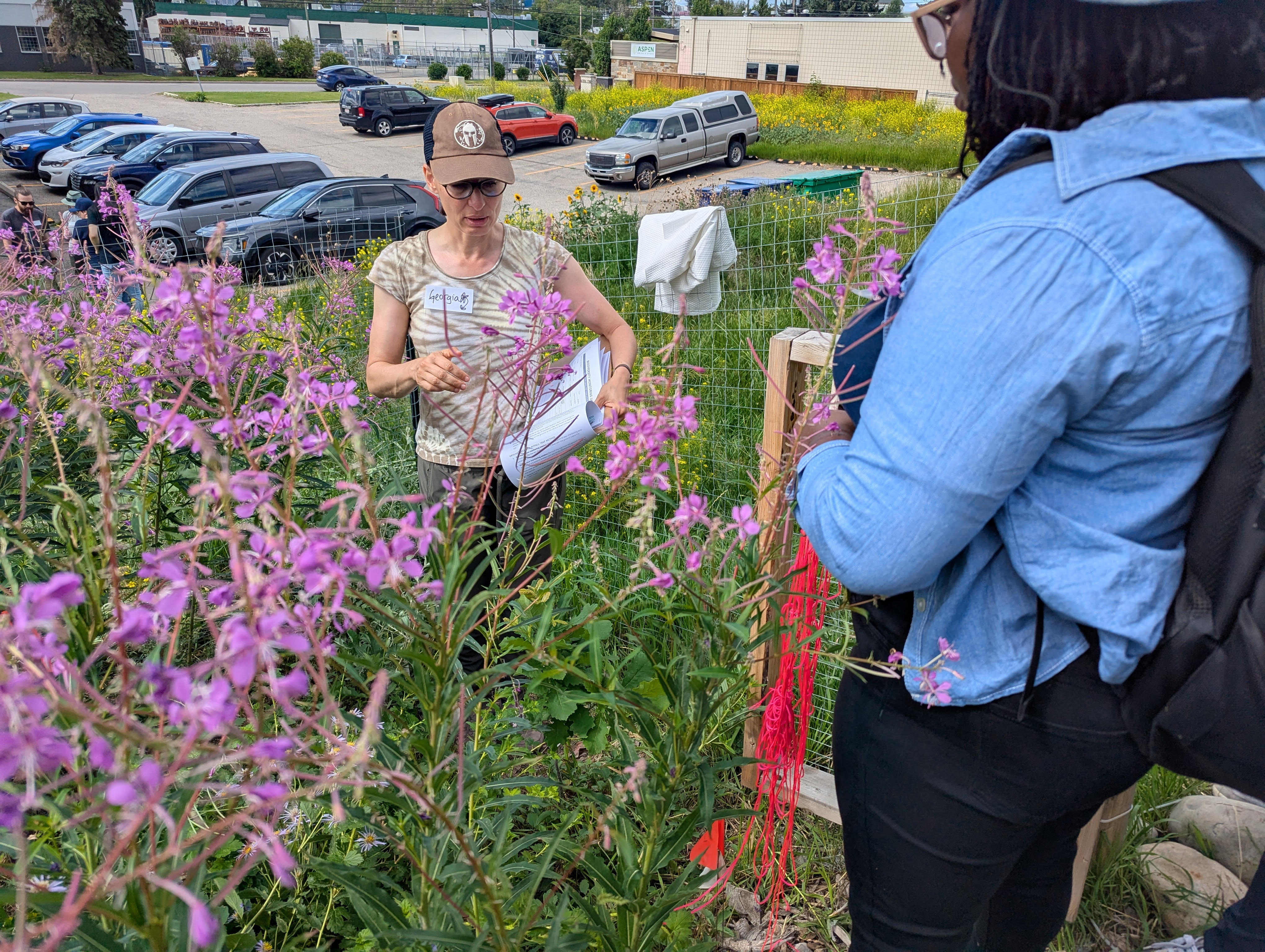
Sara Jordan-McLachlan and Georgia Blum served as our biodiversity and iNaturalist experts. Sara taught us how to log observations on the iNaturalist app with our phones and contribute to specific projects. She gave us tips on how to look for biodiversity of birds, mammals, and any critters we might see in our forests. Georgia led the group looking for insects, arachnids, and any other ground dwellers we may encounter. She showed us how to use pitfall traps and ceramic tiles to find creatures crawling on the ground, as well as a timed observation method. We found the pitfall traps took too much digging to deploy; to protect the roots of our plants we will not use this method in the future. The tile method involves leaving ceramic tiles directly on the soil for at least a day before monitoring. On the monitoring day you flip the tiles and see what scurries away. We will use the tile method in conjunction with a “sit and observe” method to monitor ground crawlers in the future.
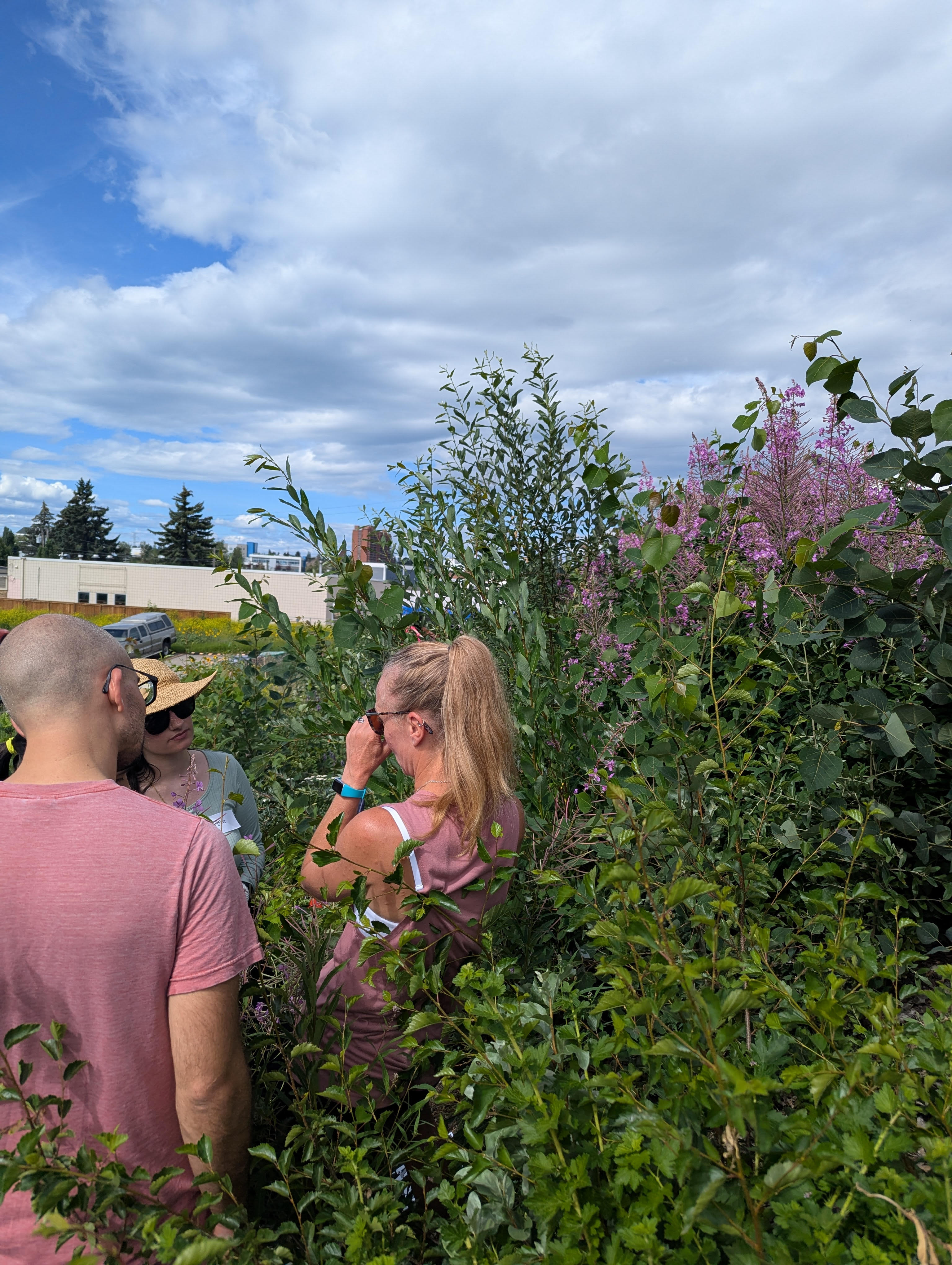
Once everyone had a taste of each protocol, we reconvened for snacks and to chat about our day. There was so much enthusiasm from the entire group. Nearly everyone signed up for future sessions to monitor a forest or participate in a Mini Forest Discovery Day. Our debrief helped us learn some weak spots that we can improve, like needing more time for our training sessions. Our two-hour event went by very quickly; another hour would have created a more relaxed pace and more opportunities for our volunteers to get to know each other. The next steps we will take are to create a Slack channel for this group to communicate easily so they can self-organize days to collect biodiversity data and get to know each other better.
At the end of the day, I felt hopeful for the future of this citizen science project. The group was full of people with a large range of expertise and experience. It was heartening to see the volunteers interacting and encouraging each other, freely sharing their knowledge and listening intently. Our city is filled with citizens who want to be engaged that are not quite sure how to get started. This initiative will give people an opportunity to meet likeminded individuals, contribute to citizen science, and become active climate citizens.
By Lindsey Mcdonald
Do you like this page?